Sellers
How to Sell Your Issaquah Home: The 2026 Gateway City Seller's Guide
May 17, 2026 · 13 min read

By Adriano Tori
Founder & Designated Broker, RexMont Real Estate
WA Lic. #27660
Seattle & Eastside Real Estate Market Strategist
★ BusinessRate Best of Bellevue 2025
★★★★★ 1,235 Google reviews · Seattle and the Eastside's most-reviewed brokerage
Issaquah sellers face a unique market: Cascade Mountain backdrop, top-rated ISD schools, and a buyer pool that ranges from first-time Eastside buyers to luxury estate purchasers at Issaquah Highlands. RexMont's 2026 guide covers neighborhood pricing, I-90 corridor timing, trail-access premiums, and how to position for the specific buyer your home attracts.
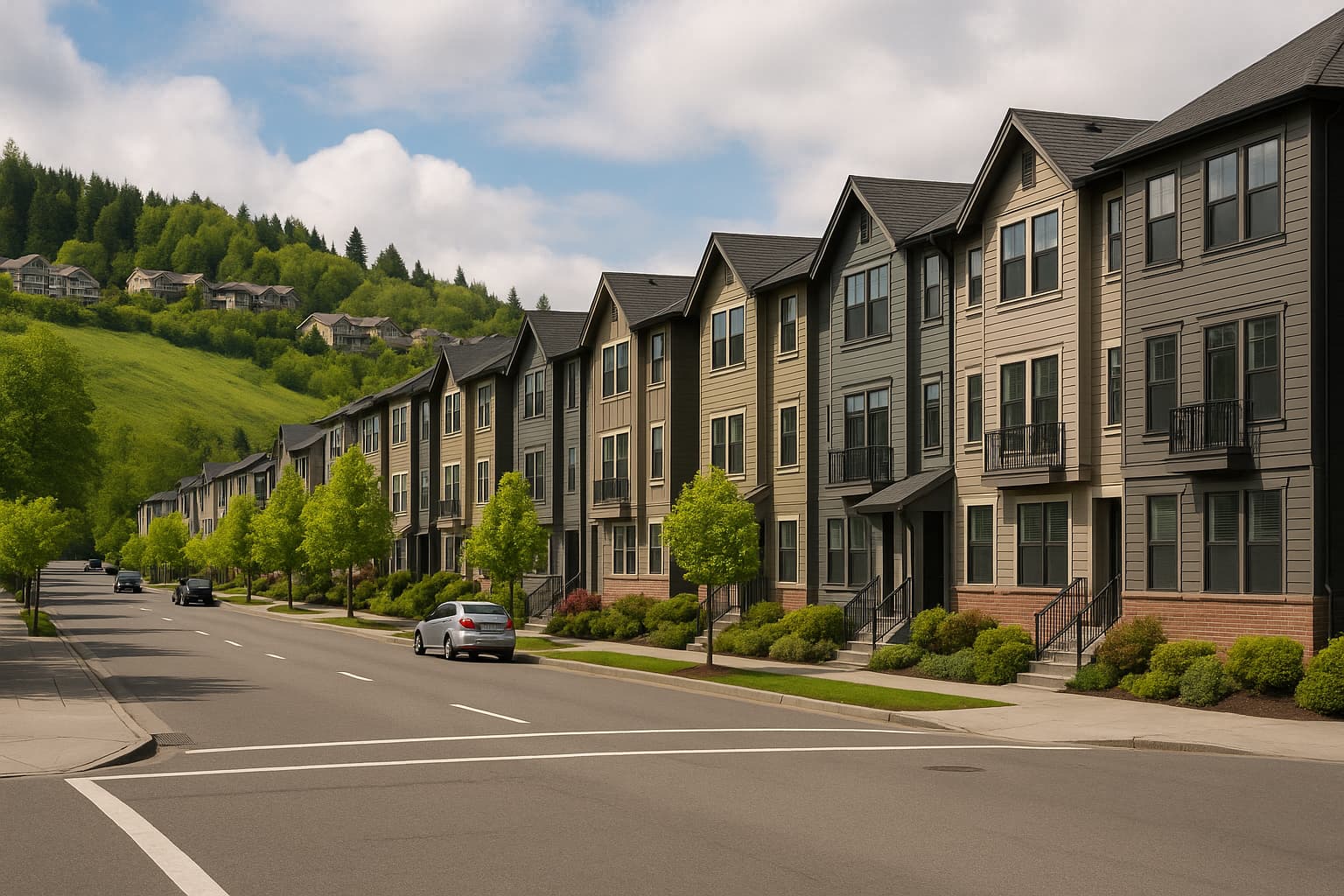
What makes Issaquah a seller's market unlike any other on the Eastside
Issaquah is the Eastside's gateway city — the point where suburban density transitions into mountain-adjacent living, where I-90 connects tech-corridor workers to Cascade recreation, and where Issaquah School District's academic profile attracts families who specifically choose Issaquah over comparable Bellevue or Kirkland alternatives. This specificity is a seller advantage: the buyer who wants Issaquah is not cross-shopping it against Redmond. They've decided they want the mountains, the schools, and the space — and they're willing to accept the commute math to get it.
That specificity also means pricing and marketing need to be dialed in at the neighborhood level. An Issaquah Highlands home competes with a completely different buyer pool than an Olde Town Issaquah craftsman or a Talus estate on the hillside above town. Treating Issaquah as a single market — and using Issaquah-wide averages to price — is reliable way to either underprice or overprice by 10–20%.
The sellers capturing maximum Issaquah value in 2026 understand what their specific home is offering: schools (and which specific pathway), trail access (Cougar Mountain, Issaquah Alps, Tiger Mountain), commute reality (I-90 is genuinely fast when it's moving, and genuinely miserable when it's not), and community character. Buyers who want what your home offers will pay for it — but only if the listing tells the story clearly.
Issaquah neighborhood pricing tiers: Highlands, Talus, Olde Town, and the valley floor
Issaquah Highlands is the city's prestige family tier: master-planned community with village center, parks, Fire Station No. 74 community hub, and views of the surrounding mountains. Homes run $950K–$3M depending on size, view, and proximity to Highlands village. The buyer here is specifically choosing Highlands for the community infrastructure — the walkability to Issaquah Highlands Town Center, the fire-hose-distance park system, and the Skyline High School assignment that is Highlands' most powerful demand driver.
Talus is the luxury hillside tier above Issaquah proper: larger lots, mountain and valley views, more estate-scale homes ($1.5M–$4M+), and a quiet character that contrasts sharply with the Highlands village density. Talus buyers are typically purchasing a specific lifestyle — views, privacy, natural setting — and are willing to trade the Highlands community feel for the hillside premium.
Olde Town Issaquah is the character tier: renovated craftsmans, historic Gilman Square walkability, and the Issaquah Farmers Market. Prices run $800K–$1.8M for updated single-family homes, with a buyer profile that skews toward buyers who explicitly value historic character over suburban newness. This is Issaquah's most undervalued submarket relative to what it offers.
The valley floor (Newport Way, Issaquah-Hobart Road corridor) offers Issaquah's most affordable single-family inventory — larger lots, older homes, and prices starting around $750K. This submarket attracts first-time buyers and those prioritizing land over condition or finishes. Marketing here leads with the ISD assignment and the proximity to I-90 access, not the finishes.
I-90: managing the commute perception problem
The single biggest objection Issaquah buyers raise is the I-90 commute. This is a legitimate concern — Issaquah sits east of Bellevue and Seattle, and westbound I-90 during peak hours can add 20–40 minutes to a Bellevue-to-Issaquah commute that's 15 minutes at 9am on a Saturday. Sellers who ignore this objection lose offers. Sellers who address it directly — and reframe it accurately — win them.
The commute reality for Issaquah in 2026 is more nuanced than the worst-case scenario buyers often assume. Microsoft and Amazon Eastside offices are 15–20 minutes from Issaquah in non-peak conditions. Hybrid work schedules have materially reduced the number of days most tech workers are making the Seattle commute — 2–3 days per week changes the calculus of a 35-minute drive versus a 12-minute one significantly. Express lanes on I-90 are underutilized by most buyers who don't know they exist.
In your listing and showing conversations: provide real commute data, not anecdotes. The Eastside Commuter study (Google Maps peak vs. off-peak times, Express Lane access from Issaquah) tells a different story than the peak-hour horror story. Sellers who arm buyers with accurate commute information are more likely to hold the purchase decision than those who let buyer anxiety fill the vacuum with worst-case assumptions.
One practical note: if your home has EV charging — Level 2 or L3 — document it prominently. A meaningful percentage of Issaquah's buyer pool drives an EV. For an EV driver, the I-90 commute to Bellevue costs approximately $1.50–$2.50/day in electricity. That changes the commute economics entirely.
The trail and mountain access premium — and how to quantify it for buyers
Issaquah sits at the base of the Issaquah Alps — Cougar Mountain, Squak Mountain, and Tiger Mountain — forming one of the largest urban wilderness areas in the United States. Residents can access 165+ miles of multi-use trails directly from neighborhood streets. This access is not incidental to the Issaquah home purchase decision; for a significant percentage of buyers, it is the primary reason they are in Issaquah and not Bellevue.
Sellers whose homes provide direct or near-direct trail access should quantify it in the listing. 'Three blocks to Cougar Mountain trailhead' is more valuable — and more specific — than 'near hiking.' Drone or aerial photography showing the forested backdrop creates a visual impression that no description fully replaces. An aerial shot of your backyard with Cougar Mountain's ridgeline visible answers the buyer's lifestyle question before they've scheduled a showing.
The trail premium in Issaquah is real but not uniform. Homes that back directly to protected forest or have private trail gates consistently command 5–12% premiums over comparable homes without that access. Homes within a 5-minute walk of a major trailhead carry a softer premium — perhaps 2–4% — that buyers who are serious trail users will recognize and pay for. Document the trail access in your listing with distance, trail name, and what's accessible from it.
Prep and positioning: what Issaquah buyers are analyzing
Issaquah buyers at every price point are value-conscious. This is not the Medina or Hunts Point buyer who overlooks condition because they're paying for an address. Issaquah buyers compare price-per-sqft carefully, notice deferred maintenance, and will use inspection findings to negotiate aggressively. Preparation quality has a direct and measurable effect on final sale price.
The highest-return prep items for Issaquah homes: exterior paint or power washing (first impression in a drive-by or online photo is critical), roof condition documentation (I-90 corridor weather accelerates roof wear — address it proactively or price it in), and kitchen and bathroom surface refreshes that cost under $10K but photograph dramatically better than dated originals.
For Issaquah Highlands homes specifically: HOA compliance matters. Highlands has active architectural review, and buyers are aware of it. A property with documented HOA compliance, freshly painted deck boards, and maintained landscaping signals that the home has been managed thoughtfully — which reduces buyer anxiety about what they might be walking into at closing.
Sunset and golden-hour photography: Issaquah homes with mountain views have a distinct photographic advantage during late-afternoon light. Twilight photography sessions for any Issaquah home with a Cascade backdrop, Tiger Mountain view, or elevated valley perspective are one of the highest-return pre-listing investments available. The photography sells the lifestyle; the listing confirms the specs.
Frequently asked questions
- What is my Issaquah home worth in 2026?
- Issaquah home values span a wide range depending on neighborhood: from $750K+ for valley-floor homes to $4M+ for Talus hillside estates. Automated valuations are unreliable in Issaquah because trail-access premiums, Highlands community value, and ISD school-path differences can't be modeled algorithmically. A manual CMA from an agent who works Issaquah regularly is the only accurate baseline.
- Is the I-90 commute from Issaquah a problem when selling?
- It's a buyer objection, not a dealbreaker — if you address it directly. Hybrid work schedules have materially reduced its impact for most tech-worker buyers. Framing the commute with accurate peak vs. off-peak data, EV cost reality, and the Express Lane option usually converts the objection into an acceptable tradeoff. Sellers who address it head-on do better than those who let buyer anxiety fill the gap.
- How does the Issaquah School District affect home values?
- ISD is a primary demand driver for Issaquah buyers. Skyline HS assignment (Issaquah Highlands) carries the strongest premium; Liberty HS (Klahanie-adjacent areas) draws strong local demand. School path should be verified by exact parcel address and documented in the listing so buyers aren't left to figure it out themselves.
- When is the best time to sell an Issaquah home?
- Spring (March–May) is primary season — ISD-focused families target this window. Summer is secondary, particularly for trail-lifestyle buyers who want to experience the outdoor access at peak season. Fall (September–October) offers a solid alternative with reduced seller competition.
- What Issaquah-specific prep should I prioritize?
- Roof documentation, exterior condition (paint, decks, landscaping), trail access framing in photography and listing copy, and EV charging documentation if present. For Highlands homes: HOA compliance documentation. For Talus and hillside homes: view photography at golden hour. These are the prep items that convert browsers into buyers in Issaquah's specific market.
Talk to RexMont
Ready to list? Let's build your pricing strategy.
RexMont is Seattle and the Eastside's most-reviewed brokerage — 1,235 five-star Google reviews, $1B+ closed. Our agents pair live market data with honest pricing, offer strategy, and negotiation guidance built for Seattle, Bellevue, and the Eastside.