Neighborhood Guides
Eastside vs. Seattle: Where Should You Buy in 2026?
May 12, 2026 · 14 min read

By Adriano Tori
Founder & Designated Broker, RexMont Real Estate
WA Lic. #27660
Seattle & Eastside Real Estate Market Strategist
★ BusinessRate Best of Bellevue 2025
★★★★★ 1,235 Google reviews · Seattle and the Eastside's most-reviewed brokerage
Seattle offers urban energy and neighborhood character. The Eastside offers schools, space, and newer construction. After the 2 Line opened and 'The Great Migration' accelerated, the right answer is more nuanced — and more data-driven — than ever.
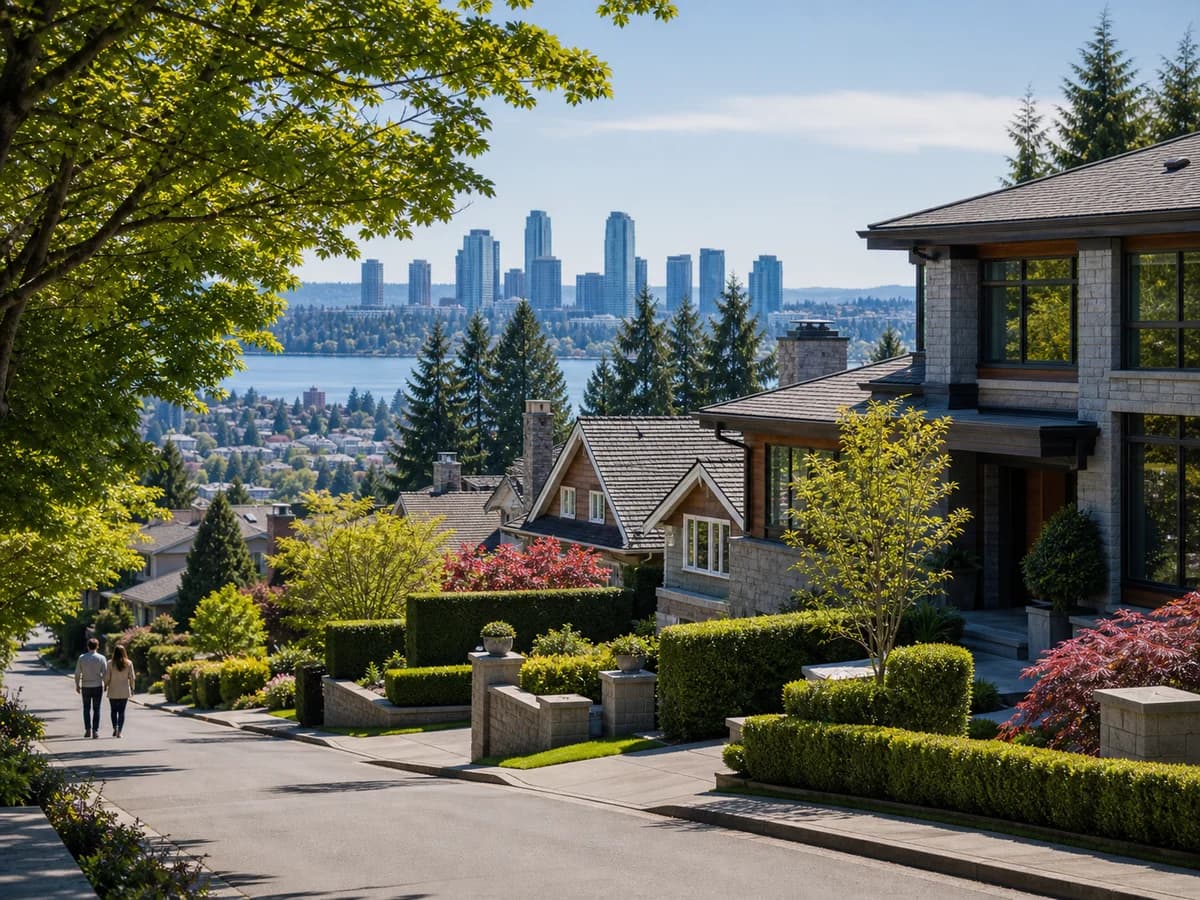
What has actually changed about this decision in 2026?
I've had this conversation with hundreds of buyers over the past decade, and the framing has fundamentally shifted. Three years ago, 'Seattle or Eastside?' was mostly about commute tolerance and lifestyle preference. Today, it's a more data-driven question that involves school district performance scores, post-East Link commute reality, city tax policy trajectories, and a generational migration trend that's quietly reshaping both markets.
The 2 Line East Link — now fully operational — has put Bellevue downtown 14 minutes from Capitol Hill and 17 minutes from Westlake by rail. Buyers who live in Bellevue can commute to Seattle tech offices without a car, and Seattle buyers now have direct rail to Bellevue, Overlake, and Redmond Tech Station. This single infrastructure change has made the either/or calculation more fluid than it's ever been.
At the same time, a clear demographic movement has emerged: families with school-age children are leaving Seattle at higher rates than they're arriving. We track this at RexMont in the transaction data — a meaningful share of our Eastside buyer clients are relocating from Seattle neighborhoods, motivated almost entirely by school district access. We call it 'The Great Migration,' and it's one of the most consistent buyer patterns we see in 2026.
What does $1.5M actually buy? Ballard vs. Kirkland price-per-sqft reality
The 'Seattle is cheaper' assumption that held through 2018 no longer reflects the market. At the $1.5M price point — a common budget for dual-income tech households — the comparison looks like this: In Ballard, $1.5M buys approximately 1,900–2,200 square feet of single-family, typically 1940s–1960s construction with some deferred maintenance, a lot under 5,000 sq ft, and a Walk Score above 80. In Kirkland at the same price, you're buying 2,400–2,800 square feet of 1990s–2010s construction, a lot of 6,000–8,000 sq ft, and Lake Washington School District access.
On a price-per-square-foot basis, Ballard and central Kirkland have effectively converged at $620–$720/sq ft for quality single-family. The Eastside is no longer the 'more house for the money' market it was. What you're buying is different — school district access, newer systems, more square footage — but not dramatically more value per dollar spent.
Where the Eastside does offer more for the money is in the $800K–$1.1M entry-level range. Outer Renton, Kenmore, Bothell, and Redmond's less central neighborhoods offer newer construction and LWSD or Northshore access at prices Seattle's established neighborhoods can't match. First-time buyers or those stretching to get into a specific school district consistently find more options at the $900K–$1.1M range on the Eastside than in Seattle.
How the 2 Line East Link changed the commute calculation
Before East Link opened, the Eastside commute to downtown Seattle was a car-or-bus proposition. The 520 bridge and I-90 corridor were bottlenecks that cost 45–75 minutes each way in peak traffic. That calculus has changed materially. Bellevue downtown to Capitol Hill is now 14 minutes by rail on a fixed schedule — no traffic, no parking, no bridge stress. For buyers whose Seattle office is near a Link station, Bellevue now competes with Seattle neighborhoods like Beacon Hill or Columbia City on pure commute time.
The reverse commute pattern has become equally significant. Microsoft and Amazon's Bellevue tech campus draws Seattle residents east on Link every morning. Buyers who live in Capitol Hill or South Lake Union — paying Seattle prices for the urban lifestyle — now commute east to Bellevue tech by rail just as easily as they'd commute downtown. This has softened one of the Eastside's oldest disadvantages for buyers who prioritize Seattle urban living.
What Link doesn't fix: late-night frequency, first/last mile connectivity in Eastside suburbs, and coverage for neighborhoods far from the line (Sammamish, Issaquah, Finn Hill). If your life involves frequent late-night trips or you're buying in outer Sammamish or Issaquah, car dependence is still the reality. East Link's impact is concentrated on the Bellevue-Redmond corridor and on buyers whose Seattle offices are within walking distance of Link stations.
Seattle's genuine advantages: walkability, culture, and neighborhood soul
I want to be honest about this, because I represent a lot of Eastside buyers and it would be easy to tilt the analysis. Seattle has genuine advantages that no amount of trail access or school ranking can replicate. Neighborhoods like Capitol Hill, Fremont, Ballard, Phinney Ridge, and Madison Park have accumulated decades of authentic character — independent restaurants, live music venues, art galleries, street festivals, and the kind of social fabric that dense urban communities build over generations. The Eastside's newest neighborhoods are pleasant and well-designed, but they don't replicate this.
Seattle's walkability is categorically different. Walk Scores in the 70s–90s for central Seattle neighborhoods mean real car-optional living — grocery stores, coffee shops, transit, and restaurants within walking distance. Most Eastside neighborhoods outside downtown Bellevue and downtown Kirkland score in the 30s–50s, requiring a car for most daily errands. For buyers who find car dependence genuinely frustrating, this quality-of-life gap is real.
Transit density and bike infrastructure in Seattle also remain significantly better than anywhere on the Eastside. If you don't own a car or prefer not to drive, Seattle simply gives you more options at this moment in the region's development. East Link improves Eastside rail access, but the last-mile infrastructure and bus network density still favor Seattle for car-free or car-light living.
The Eastside's structural advantages: schools, trails, and tech campus proximity
The school district argument for the Eastside isn't close, and buyers with school-age children typically don't need convincing once they see the data. Bellevue School District, Lake Washington School District, Issaquah School District, and Northshore School District consistently rank among the top 5–10% of districts statewide on academic performance, parent satisfaction, and graduation rates. Seattle Public Schools have improved in parts but lag on most metrics, with significant variation by assignment area and school.
The Bellevue School District premium is measurable in the transaction data. Homes in BSD attendance zones consistently trade at 8–12% above comparable non-BSD homes in adjacent neighborhoods. Buyers are effectively paying for school access, and the market prices it accurately. If school quality is your primary driver, buying in a BSD, LWSD, or ISD zone is a structural investment — you're buying access to an asset that depreciates very slowly.
Trail and outdoor access on the Eastside is qualitatively different from Seattle's park system. Cougar Mountain Regional Wildland Park (3,100 acres), Tiger Mountain State Forest, Bridle Trails State Park, and the Sammamish River Trail system provide old-growth and backcountry access within a 10–15 minute drive of most Eastside homes. Seattle's parks are excellent urban parks — they're not wilderness. For households where hiking, mountain biking, and trail running are regular activities rather than weekend trips, this daily access has measurable quality-of-life value that's hard to put on a spreadsheet.
The Great Migration: why families are relocating from Seattle to the Eastside
Over the past three years, we've noticed a consistent pattern in our buyer pipeline: a meaningful share of our Eastside transactions involve families relocating from Seattle neighborhoods — Ballard, Queen Anne, Phinney Ridge, Green Lake, Capitol Hill. The driver is almost always the same: school enrollment. These aren't families leaving Seattle because of crime concerns or city dysfunction. They're families who've loved their Seattle neighborhood, bought a home there, and are now facing the reality that their assigned public school doesn't meet their expectations.
The math often surprises buyers. A family with two school-age children paying $3,500–$4,500 per child annually for private school in Seattle is spending $7,000–$9,000 per year on schooling that they'd avoid entirely in a Bellevue or LWSD district assignment. Over a 10-year school run, that's $70,000–$90,000 in realized savings — capital that could have gone toward principal, retirement, or the kids' college funds. When buyers run this calculation, the Eastside often looks more financially efficient even at a $100K–$150K higher purchase price.
The migration pattern has a countervailing force: some Eastside families move to Seattle when their children graduate and suburban lifestyle appeal fades. Empty-nesters from Bellevue and Kirkland who've finished raising children sometimes return to Seattle for urban walkability and cultural access. Both flows are real. The net migration in 2026 favors the Eastside among families with school-age children, and favors Seattle among younger buyers without children and older buyers returning to urban living.
Three buyer profiles: which market actually fits your situation?
The Tech Executive profile: dual income, Amazon or Microsoft, combined household $400K+, two school-age kids, 3–4 day in-office schedule, budget $2M–$3M. This buyer almost always lands on the Eastside — specifically Bellevue or Kirkland. The math is clear: school district access, proximity to the Eastside tech campus cluster, newer construction requiring less maintenance attention, and enough scale at $2M+ to find real quality inventory. Seattle at this budget buys a premium neighborhood but requires navigating SPS enrollment or private school costs. The Eastside wins decisively for this profile.
The Growing Family profile: first or second purchase, combined income $220K–$320K, one child or expecting, budget $900K–$1.3M. This is where the Eastside's entry-level advantage is most pronounced. At $1.1M–$1.2M, the Eastside (Redmond, Kenmore, Bothell, outer Kirkland) offers 2,200–2,600 sq ft of newer construction in good school districts. Seattle at the same budget is older inventory, smaller lot, and a school enrollment question that requires research. Most growing families in this budget range who prioritize school predictability land on the Eastside.
The Urban Professional profile: single or couple, no children, downtown Seattle or SLU employer, values walkability and neighborhood identity, budget $700K–$1.1M. This buyer belongs in Seattle. Capitol Hill, Fremont, Ballard, and Phinney Ridge offer genuine urban character, walkability, and social infrastructure that the Eastside doesn't replicate. Commute to downtown Seattle is trivial. The lack of school district pressure removes the Eastside's primary structural advantage. For this profile, an Eastside purchase is often a lifestyle sacrifice that doesn't produce a compensating financial benefit.
Seattle's JumpStart tax and what it signals about long-term holding costs
One angle buyers rarely factor into the Seattle vs. Eastside analysis is municipal tax policy trajectory. Seattle's JumpStart Payroll Expense Tax — applied to businesses with payroll over $7M at rates up to 2.4% on high-earning employees — has created an ongoing conversation about Seattle's business climate. Several high-profile employers have noted JumpStart as a factor in Eastside office expansions or Seattle office reductions, though the causal link is debated.
For homeowners, the relevance is indirect but real: Seattle's structural fiscal challenges, including homelessness response costs, SPOG contract pressures, and infrastructure maintenance backlogs, suggest a trajectory of sustained property tax increases and potential levy measures that Eastside cities don't face at the same scale. Bellevue, Kirkland, and Redmond operate with balanced budgets and lower per-capita fiscal stress. Over a 10-year holding period, this could translate to measurably lower property tax burden on the Eastside.
This is not a prediction that Seattle's property values will decline — they won't, absent a macro recession. Seattle's structural desirability, employment density, and urban infrastructure are durable. But buyers making a 10–15 year commitment should factor the full cost picture, including tax trajectory and city fiscal health, rather than treating them as identical. The Eastside's fiscal position is structurally stronger at this moment, and that's worth knowing before you buy.
The hybrid answer: Seattle neighborhoods that work for both worlds
The most underrated Eastside vs. Seattle strategy is buying in the in-between: Seattle neighborhoods that offer urban character and Eastside commute access. Madison Park, Madrona, Leschi, and Mount Baker sit on the I-90 corridor and offer 15–20 minute non-peak drives to central Bellevue. These neighborhoods have genuine Seattle character — walkable commercial corridors, neighborhood restaurants, strong community identity — while offering meaningful Eastside commute access that Capitol Hill and Fremont can't match.
Buyers who are genuinely torn between urban Seattle living and Eastside employment should model this option seriously. Madison Park in particular attracts buyers who want Seattle prices, Seattle character, and Eastside commute viability — and it's worth noting that Lake Washington School District doesn't extend west of the lake, so the school district trade-off remains (these neighborhoods are SPS), but the commute trade-off is significantly softened.
For buyers using the 2 Line, Bellevue itself offers a version of this hybrid. Downtown Bellevue, the Spring District, and Old Bellevue are becoming legitimately walkable with restaurant density and urban energy that 2016 Bellevue didn't have. For buyers who want more urban character on the Eastside, these Bellevue neighborhoods have improved more in the last three years than any other Eastside micro-market. They're not Capitol Hill, but they're no longer purely suburban either.
Frequently asked questions
- Is it cheaper to live in Seattle or Bellevue in 2026?
- At the $1M–$1.5M price range, Seattle and Bellevue have largely converged on a price-per-square-foot basis ($620–$720/sq ft for quality single-family). The 'Seattle is cheaper' assumption that held through 2018 no longer applies uniformly. Below $1.1M, the Eastside offers more entry-level inventory. Above $2M, Bellevue and Mercer Island command significant premiums over comparable Seattle luxury. Factor in ongoing property tax trajectory and potential school costs (private school in Seattle can run $7K–$9K/year per child) for a full picture.
- Which is better for families: Seattle or the Eastside?
- For families where public school quality is a priority, the Eastside wins clearly. Bellevue School District, Lake Washington School District, Issaquah School District, and Northshore School District consistently outperform Seattle Public Schools on academic metrics. The BSD premium is quantifiable — homes in BSD zones trade 8–12% above comparable non-BSD homes. Families paying $3,500–$4,500 per child annually for private school in Seattle often find the Eastside more financially efficient even at a higher purchase price.
- How has the 2 Line East Link changed the commute between Seattle and the Eastside?
- Significantly. Bellevue downtown to Capitol Hill is now 14 minutes by rail. Bellevue to Westlake is 17 minutes. This has made Bellevue a viable option for buyers who previously ruled it out due to car commute concerns, and it's created a genuine reverse commute flow: Seattle residents commuting east to Bellevue and Overlake tech campuses by rail. East Link's impact is strongest for buyers in the Bellevue-Redmond corridor whose offices are near Link stations. Outer Sammamish, Issaquah, and Finn Hill remain car-dependent.
- What is Seattle's JumpStart tax and does it affect home buyers?
- Seattle's JumpStart Payroll Expense Tax applies to businesses with payroll over $7M at rates up to 2.4% on high earners. For homeowners, the relevance is indirect: Seattle's fiscal structure — including homelessness costs, SPOG contracts, and infrastructure backlog — suggests a trajectory of sustained property tax increases that Eastside cities (Bellevue, Kirkland, Redmond) don't face at the same scale. Over a 10-year hold, Eastside buyers may see meaningfully lower cumulative property tax burden. This doesn't predict Seattle home value decline, but it's part of the full cost comparison.
- Which Eastside city feels most like Seattle in character and walkability?
- Downtown Bellevue and the Spring District have improved the most in urban character over the last three years — walkable restaurant density, some independent retail, and East Link access. Old Bellevue also offers a walkable village feel. Downtown Kirkland has a genuine waterfront walkable core. None of these replicate Capitol Hill or Fremont's density or cultural energy, but they're meaningfully different from the purely suburban Eastside of a decade ago. For buyers prioritizing walkability on the Eastside, downtown Bellevue and downtown Kirkland are the two markets to look at.
Explore related pages
Talk to RexMont
Get a strategy session before you move.
RexMont is Seattle and the Eastside's most-reviewed brokerage — 1,235 five-star Google reviews, $1B+ closed. Our agents pair live market data with honest pricing, offer strategy, and negotiation guidance built for Seattle, Bellevue, and the Eastside.